Eid Al Etihad at home: decorating with the four colours, and the rules for the flag
The UAE marks its 55th National Day on 2 December 2026. Red, green, white and black can dress a home in many ways, but the flag itself comes with clear rules on how it hangs, how it is kept and when it must be replaced.
The United Arab Emirates celebrates its 55th National Day, officially Eid Al Etihad, on Wednesday 2 December 2026. The public sector has a holiday from 2 to 4 December and returns on Monday 7 December, The National reports, and this year's celebrations fall within the UAE's Year of Family. For many households the days around the holiday are the one time of year when the home takes on the national colours, and the flag on the balcony is the centrepiece.
What the four colours mean
The flag was first raised on 2 December 1971 by Sheikh Zayed bin Sultan Al Nahyan, the country's founding father, as Gulf News recounts. The flag's four colours were inspired by a line of verse by the poet Safi al-Din al-Hilli: "White are our acts, green our fields, black our battles, and red our swords."
According to Gulf News, the colours stand for:
- Red: courage and sacrifice.
- Green: prosperity and growth.
- White: peace and honesty.
- Black: strength and determination.
Decorating with the colours, not with the flag
The official guidelines protect the flag itself and leave the colours free for decoration. According to Gulf News' summary of the guidelines, the flag must not be altered by changing its colours or adding symbols, designs, images or pins; must not be used for commercial advertising or as part of a trademark; and must not be worn as a costume or used for decoration in a way that violates its intended use.
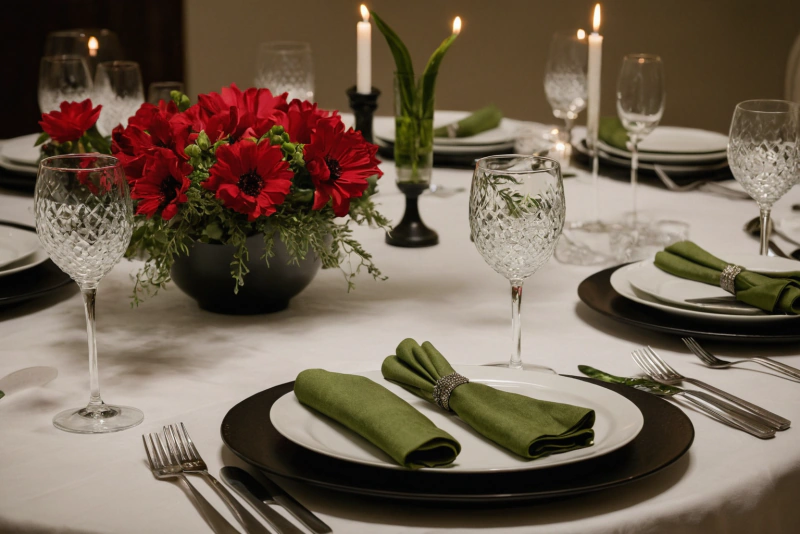
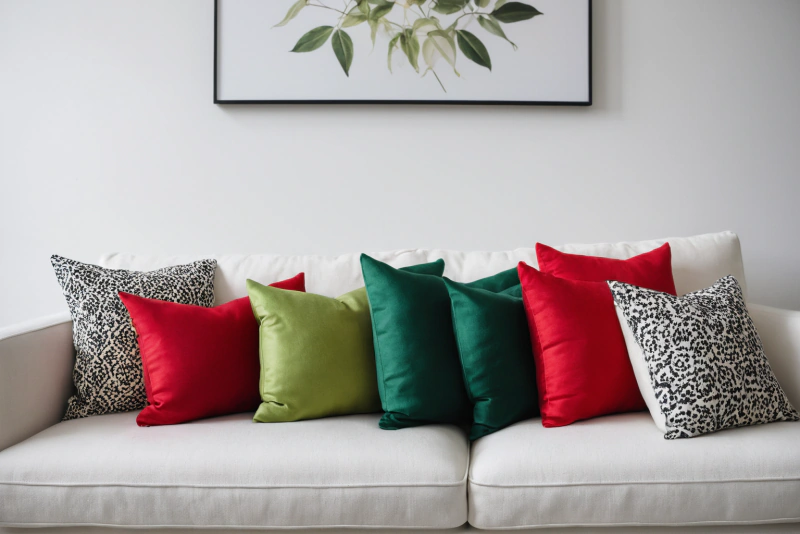
The home still offers plenty of room for them. A table set in white with green napkins, black plates and red flowers, cushions in the four colours on a sofa, or a corner of the majlis arranged around them, all carry the occasion without touching the rules. The flag itself belongs on a pole, a wall or a balcony, hung correctly. Guests for the holiday see the entrance hall first, and the article on the entrance hall in a Dubai home covers its light, mats and incense.
How to hang the flag correctly
The rules on orientation are simple. When the flag hangs horizontally, the red section must be on the left-hand side of a person facing it; when it hangs vertically, the red section must point upwards, according to the guidelines reported by Gulf News and Khaleej Times. The flag should be secured properly and should not touch the ground, and where it flies alongside the flags of other countries, the UAE flag must not be positioned lower than the others.
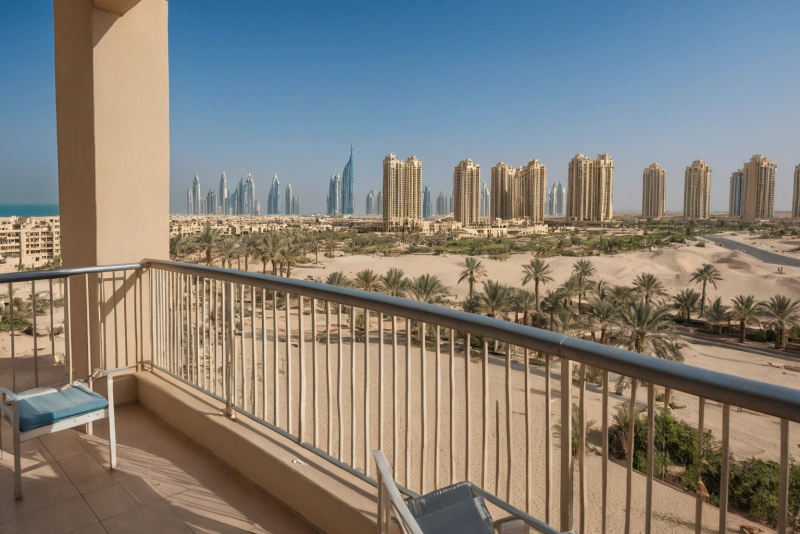
A flag on a balcony also falls under the building's rules for what may be fixed to the façade. The article on cushions and shades for the winter balcony sets out what Dubai's balcony rules allow, and a building's management can confirm whether a bracket needs approval.
Faded flags must be replaced
A flag is a textile hung in full sun, and it fades like any other. Khaleej Times, quoting the UAE Flag and Official Portraits Guidelines published by the UAE Government Media Office, reports that flags that are worn, damaged or discoloured must be replaced and never raised, regardless of the severity of the damage. The same guidelines call for flags to be inspected before each raising and after storms or unusual weather, kept clean and ironed regularly, and replaced periodically to keep their colour.
The reason faded flags appear so quickly is the same reason a sofa by the window loses its colour: strong daylight can fade sensitive dyes within days or weeks, as the article on why curtains and sofas fade explains. A flag left up since last year's National Day may well need replacing, a point Abu Dhabi City Municipality made to residents before Flag Day on 3 November.
What to do with an old flag
A damaged flag should be lowered slowly, folded and kept in a suitable place while it is replaced, according to the official guide quoted by Khaleej Times. The guidelines allow damaged flags to be recycled by separating their parts, so that they no longer keep the shape or appearance of the national flag. A flag that is not in use is folded and stored properly, Gulf News adds.
The winter season that begins around National Day changes the light in UAE homes as well as the mood, a shift described in the article on December light in UAE flats. The next occasion that brings a change of colours and light into the home is Ramadan, expected to begin around 8 February 2027, covered in the article on preparing the home for Ramadan 2027.
Sources
- UAE National Day holidays 2026: public sector (13 November 2026), The National
- UAE Flag Day 2026: guidelines for raising and displaying the national flag, Gulf News
- UAE Flag Day 2026: history, meaning of colours and rules for displaying the flag, Gulf News
- Ramadan 2027 in the UAE: expected dates and Eid Al Fitr holiday (6 October 2026), The National
- UAE Flag Day: residents urged to replace worn, faded flags before raising them on Nov 3, Khaleej Times