Getting the home ready for Ramadan 2027: evening light, the majlis and safety
Ramadan is expected to begin on Monday 8 February 2027, subject to the moon sighting. The month moves life into the evening, which puts the home's lamps, lanterns, textiles and wiring to work harder than at any other time of year.

Ramadan 2027 is expected to begin on Monday 8 February, according to astronomical calculations reported by The National and Gulf News, and to last 29 or 30 days, which would place Eid Al Fitr on Tuesday 9 or Wednesday 10 March. The dates remain forecasts until the UAE's moon-sighting committee confirms them. For a household, the month shifts much of daily life into the evening, and the weeks before it are the time to prepare the rooms where family and guests will gather.
What the calendar means for the light
Ramadan in 2027 falls in the late winter, with short days. In Dubai the sun sets at about 18:08 on 8 February and at about 18:25 on 9 March, and the day lasts a little over 11 hours at the start of the month and nearly 12 hours at the end.
Iftar at sunset means that the main family meal, visits and evening gatherings all take place under artificial light, and the evening runs late. The Islamic calendar moves about 10 to 12 days earlier each year, The National notes, so the month will keep sliding through the winter in the years ahead.
Lighting a long evening
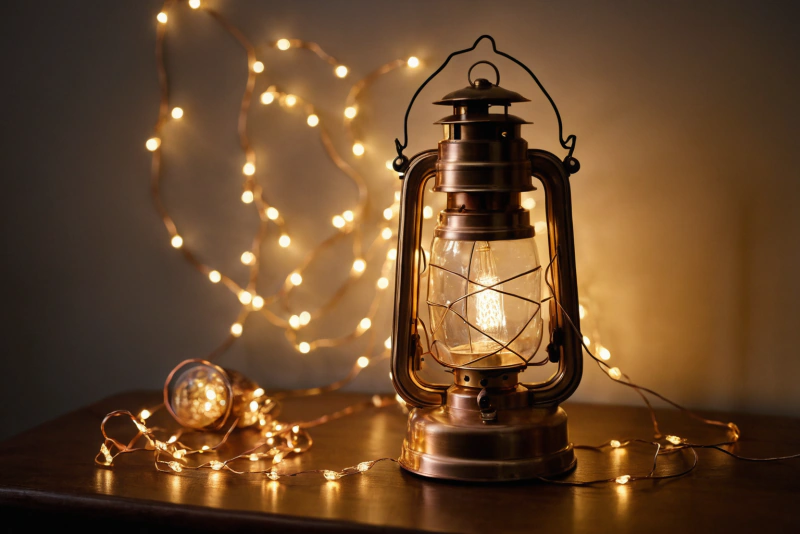
Warm, layered light suits the month best, for reasons that go beyond atmosphere. Researchers who published consensus recommendations in PLOS Biology in 2022 advise keeping evening light dim and low in short wavelengths for at least three hours before sleep, and many domestic warm white LEDs of 2,700 to 3,000 K meet that target at ordinary evening brightness. In Ramadan the hours before sleep are often busy and late, which makes warm lamps a better default than bright cool ceiling lights for the majlis and living room.
A few habits make those evenings work:
- Light the sitting area with table lamps, floor lamps and lanterns rather than the ceiling grid, and keep the brighter, neutral light for the kitchen worktop.
- Fit warm white lamps of about 2700 K in lanterns and decorative fittings, from the same model so they match.
- Check new decorative lamps for flicker before guests arrive; the article on LED flicker and how to check a bulb explains a test with a phone camera.
The article on warm and cool white light room by room explains the research behind the evening rule.
The majlis and its textiles
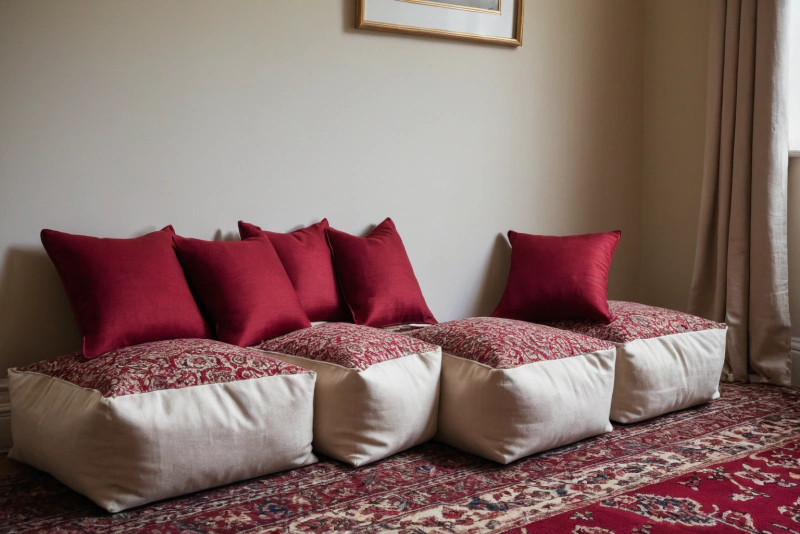
Floor cushions, carpets and the covers of a majlis take more use during Ramadan than at any other time of the year. Before the month starts is the time to clean them, to check covers that have faded where the winter sun now reaches them, and to turn rugs so that wear and light spread evenly; the article on why curtains and sofas fade by the window explains how quickly colour goes in direct sun.
The majlis also featured at the 2026 Dubai Design Week, whose programme included new carpets by Omar Al Gurg that reflect memories of the traditional majlis, as described in the article on what the festival said about light, shade and colour.
Fire safety for a month of evenings
Civil defence campaigns before and during Ramadan return to the same risks every year. In launching its "Safe Ramadan" campaign in February 2026, the Abu Dhabi Civil Defence Authority warned against oil fires during frying and against electrical fires caused by improper load distribution or non-compliant extension leads, and urged families to clean grease from kitchen exhaust systems and to keep portable fire extinguishers and smoke detectors ready.
Incense and open flames need particular care. In a Ministry of Interior safety video reported by The National, a firefighter warned against leaving incense burners unattended or in closets, advised putting them out before leaving the house or going to sleep, and said candles and incense should be kept away from curtains and clothing and burned in a well-ventilated area. LED candles and lanterns give the same warm glow without the flame, which makes them the safer choice anywhere near cushions or curtains. The same care applies to the bakhoor that greets guests at the front door, discussed in the article on light, colour and fabric in the entrance hall.
Decorative lighting adds load to sockets that may already serve a television, a coffee machine and phone chargers. Spreading the lights across several sockets and using only compliant extension leads, as the Abu Dhabi authority urges, keeps the load where the wiring can carry it.
A checklist for the weeks before
Five tasks in late January and early February cover most of the preparation:
- Confirm the dates when the moon-sighting committee announces them, and plan guests around the expected start on 8 February.
- Clean and air floor cushions, carpets and curtains, and turn rugs.
- Swap cool white lamps in the sitting room for warm white, and test any new decorative lights.
- Replace worn extension leads, and check that smoke detectors work and a fire extinguisher is at hand.
- Choose LED lanterns over open flames near textiles, and never leave incense burning in an empty room.
The colours of the national day give way to the lantern light of Ramadan in the space of ten weeks; the article on decorating for Eid Al Etihad covers the first of the two.
Sources
- Ramadan 2027 in the UAE: expected dates and Eid Al Fitr holiday (6 October 2026), The National
- When will Ramadan 2027 begin? UAE astronomers share latest moon sighting forecasts, Gulf News
- Abu Dhabi Civil Defence Authority launches 'Safe Ramadan' campaign (18 February 2026), Emirates News Agency (WAM)
- Dangers of incense burners raised in Civil Defence video, The National
- Recommendations for daytime, evening, and nighttime indoor light exposure to best support physiology, sleep, and wakefulness in healthy adults (Brown and others, 2022), PLOS Biology
- NOAA Solar Calculator: solar calculation details, US National Oceanic and Atmospheric Administration, Global Monitoring Laboratory