Low-VOC paint in Dubai: what the municipality's limits say, and how to read a tin
Dubai Municipality caps the solvents, heavy metals and formaldehyde in paint sold for buildings. The limits are stricter than many buyers assume, and a few lines on the tin show whether a product was tested against them.

The smell of fresh paint is the smell of volatile organic compounds leaving the film as it dries. Dubai Municipality sets maximum levels for those compounds, and for heavy metals and formaldehyde, in a technical guide for paints and varnishes issued by the Dubai Central Laboratory Department, most recently on 17 July 2024. The limits matter most in bedrooms, and in any room whose windows stay shut through the summer.
What a volatile organic compound is, and why the indoor level matters
Dubai's technical guide defines a volatile organic compound (VOC) as any organic compound with a boiling point at or below 250 °C at atmospheric pressure. Paints, varnishes and waxes all contain organic solvents, and all can release those compounds into the air, according to the US Environmental Protection Agency.
The EPA reports that levels of several organic compounds average 2 to 5 times higher indoors than outdoors, and that during and for several hours after activities such as paint stripping, levels can reach 1,000 times the background outdoor level. The agency lists eye, nose and throat irritation and headaches among the immediate symptoms some people experience. A flat that stays closed and air-conditioned for most of the year keeps more of what fresh walls release in its own air.
The limits in Dubai's technical guide
The guide sets a maximum VOC content for each kind of paint, with separate figures for water-based and solvent-based products, in grams per litre of paint ready to use. The guide notes that the limits follow the European Union's Directive 2004/42/EC on VOCs in decorative paints and varnishes.
| Product | Water-based limit | Solvent-based limit |
|---|---|---|
| Interior matt walls and ceilings | 30 g/l | 30 g/l |
| Interior glossy walls and ceilings | 100 g/l | 100 g/l |
| Primers | 30 g/l | 350 g/l |
| Trim and cladding paints for wood and metal | 130 g/l | 300 g/l |
| Trim varnishes and wood stains | 130 g/l | 400 g/l |
| Exterior walls of mineral substrate | 40 g/l | 430 g/l |
The guide separates matt from glossy wall paint by sheen: a matt wall paint has a gloss of 25 or less at a 60° measuring angle, and a glossy one has more. For the walls and ceilings of a home the solvent ceiling is 30 g/l for matt paint and 100 g/l for glossy paint, whichever way the paint is made.
Heavy metals, formaldehyde and other restricted ingredients
The guide forbids cadmium, lead, hexavalent chromium, mercury and arsenic as ingredients. Traces from raw materials are tolerated up to fixed ceilings: 100 mg/kg for lead, mercury and arsenic, and 500 mg/kg for cadmium and hexavalent chromium.
Free formaldehyde in the product may not exceed 10 mg/kg. Alkyl phenol ethoxylates and the glycol ether DEGME may not be used at all. Isothiazolinone preservatives are limited to 500 mg/kg in total, with a tighter ceiling of 15 mg/kg for the 3:1 mixture of 5-chloro-2-methyl-2H-isothiazol-3-one and 2-methyl-2H-isothiazol-3-one.
How the limits reach the shop shelf
Dubai Central Laboratory runs a third-party certification scheme for low-emitting materials, and a certified maker may print the DCL Product Conformity Mark on the product. A DCL certificate issued in 2020 against the 2017 edition of Al Sa'fat names the manufacturer, lists the brand names covered, states each limit the products were assessed against, and carries an issue date and a valid-until date.
The technical guide also links the limits to Al Sa'fat, the Dubai Green Building System, in its second edition of 2023, and to the Dubai Building Code of 2021. The guide warns that meeting its limits does not by itself allow a product onto a Dubai construction site unless every other municipality requirement is met.
Reading a tin before buying
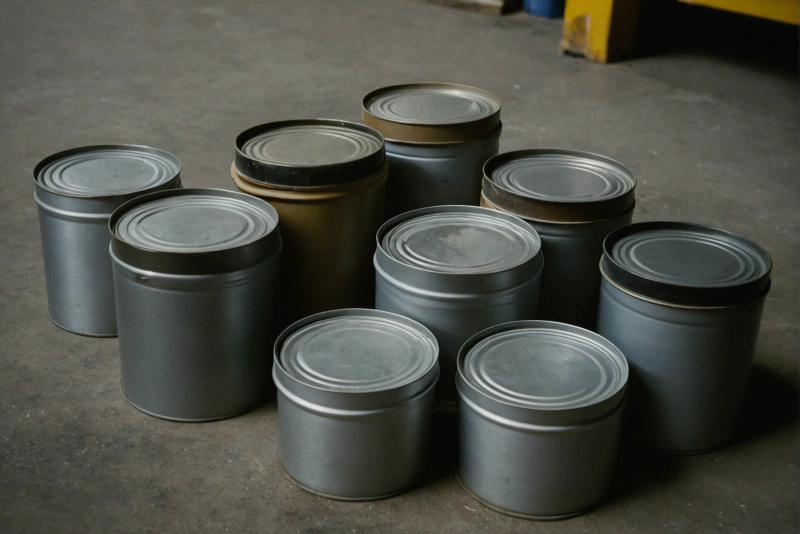
The technical guide lists information that must appear on, or with, the packaging, and that information is a useful checklist for any buyer:
- The surfaces and conditions the paint is intended for, including advice on preparing the surface and on temperature.
- How to clean tools and dispose of waste.
- How to store the paint after opening.
- Protective measures for the painter, especially when working in closed rooms.
- The quantity in the tin, with a tolerance of 1 per cent.
Three further checks take a minute in the shop. The product type should match the job, since a matt interior wall paint and a trim paint for wood carry very different limits. The DCL Product Conformity Mark, or a current certificate from the maker, shows that the product was assessed in Dubai. The certificate's valid-until date should cover the date of purchase.
Airing a room after painting
The EPA's practical advice is to increase ventilation while using products that emit VOCs, to follow label instructions, and to buy only as much paint as will be used soon, because gases can leak even from closed containers. In a UAE flat that means painting with windows open in the cooler months where possible, keeping a bathroom or kitchen extractor running, and moving leftover tins out of bedrooms.
Lime finishes work differently from acrylic paint and bring their own care points, covered in the article on limewash in a hot, humid city. Choosing the shade comes first for most people, and the article on white walls in strong Gulf light deals with that. Tenants need the landlord's consent before repainting, as the piece on painting a rented flat in Dubai explains, and a bathroom with no window needs its own approach to damp, set out in the article on a windowless bathroom and mould.
Sources
- Technical Guide for Paints and Varnishes for Interior and Exterior of Buildings and Vehicle Refinishing Products (TG-04, 17 July 2024), Dubai Municipality, Dubai Central Laboratory Department
- Certification of Coatings as per Related Sections in Al Sa'fat and Dubai Building Code (DM-DCLD-RD-DP32-5104, revision 15), Dubai Municipality, Dubai Central Laboratory Department
- Certificate of Product Conformity CL17020465, Dubai Municipality, Dubai Central Laboratory Department
- Volatile Organic Compounds' Impact on Indoor Air Quality, US Environmental Protection Agency