Cloud Dancer and the trouble with white walls in Gulf sun
Pantone made a white its colour of 2026 for the first time. In a UAE flat a white wall changes character from hour to hour, and choosing one takes more than a fan deck under shop lights.

Pantone named PANTONE 11-4201 Cloud Dancer as its Colour of the Year for 2026 on 4 December 2025, and called it "a billowy white imbued with a feeling of serenity". Smithsonian Magazine reported that Cloud Dancer is the first shade of white Pantone has chosen since it began naming a colour of the year in 1999. In a UAE home, a white wall is harder to get right than it looks.
What Pantone actually chose
Cloud Dancer is a soft white, not a bright one. Laurie Pressman, vice president of the Pantone Color Institute, told CNN that the shade has an "equal balance of cool and warm undertones", and said that a more optically bright white would have taken away its natural feeling, according to Smithsonian Magazine's report.
Pantone's own release presents the colour for apparel, accessories, packaging and interiors, where it describes Cloud Dancer as creating "atmospheres of serenity and spaciousness".
Why no white is simply white
Every white paint reflects a large share of the light that reaches it, but not the same share. The light reflectance value (LRV) of a surface runs from 0 for total absorption, which looks black, to 100 for total reflection, which looks white, as SATRA Technology explains in a guide to the British standards BS 8300-2:2018 and BS 8493.
Whites also differ in undertone, a faint lean towards yellow, red, green or blue that shows only when two whites sit side by side. Cloud Dancer's balance of warm and cool is exactly the quality Pantone stressed, and it explains why the colour is offered as an all-rounder.
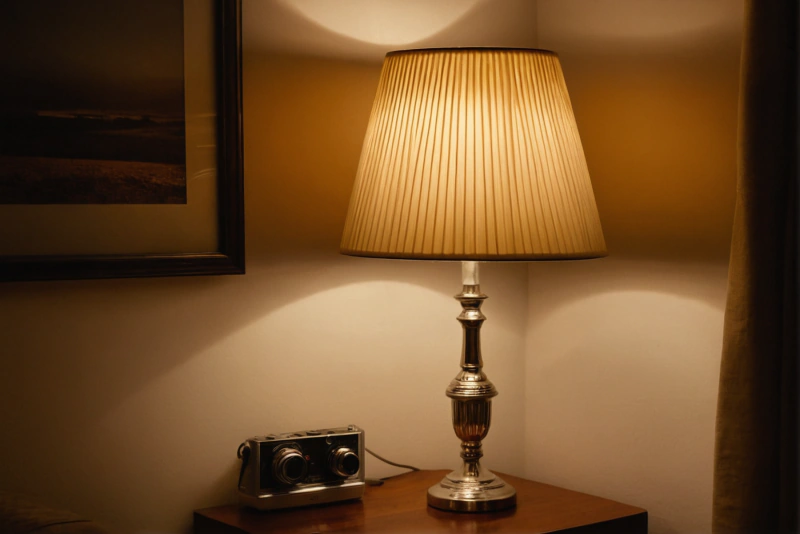
The light falling on the wall is the bigger variable. A wall lit by the open sky receives bluish light, because the atmosphere scatters blue light more than other colours, as NASA's explainer on why the sky is blue sets out. Direct sunlight is warmer, and a 2700 K lamp in the evening is warmer still: the US Department of Energy describes 2700 K light as yellowish. The same paint can therefore look crisp in the morning, almost glaring in direct afternoon sun and creamy under a lamp at night.
What strong Gulf light does to a white wall
Strong sun widens every one of those differences. A white wall that receives a patch of direct sun becomes many times brighter than the same wall in shade, and in a flat with a wide window the eye moves between both all day. A white with a slightly lower LRV tones down the brightest patches while still reading as white.
The angle of the sun matters through the year. The high summer sun stays close to the façade, while the low winter sun reaches deep into a room and across walls that are in shade for the rest of the year, a change set out in the article on December light in UAE flats. A white chosen in June can look different by December.
After dark the lamps take over, and their colour temperature decides how the white reads. A neutral white under warm 2700 K lamps reads cream, and a white with a yellow undertone under the same lamps can turn noticeably yellow. The article on warm and cool white light room by room covers which lamps suit which room.
How to test a white before painting a room
Testing on the wall the paint is meant for, in the light it will actually receive, is the most reliable check. SATRA notes that the lighting present at the time affects even a visual comparison of reflectance, which is the same reason a white chosen under shop lights can surprise at home.
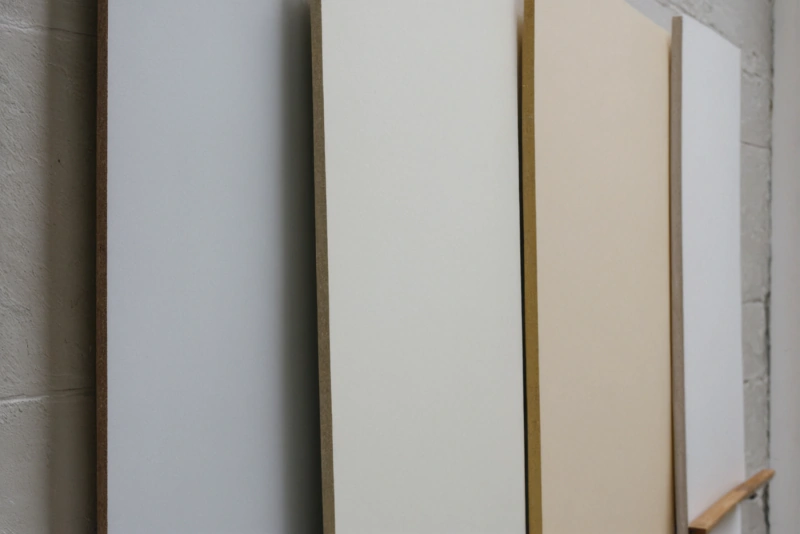
- Paint large samples, ideally on boards at least the size of a sheet of A3, rather than relying on small chips.
- Put the samples on two walls: one facing the window and one beside it, where the light arrives at a slant.
- Look at them in the morning, in the afternoon sun and in the evening with the lamps on.
- Compare two or three candidate whites side by side, since an undertone shows only in comparison.
- Keep a sheet of plain printer paper next to the boards as a neutral reference.
Where a soft white like Cloud Dancer works best
A balanced, soft white suits rooms that see both strong daylight and warm evening light, which describes many living rooms with large windows. A white that leans slightly warm helps a room that gets mostly bluish skylight and little direct sun. A brighter white with a higher LRV suits a room that is dim for most of the day, and research on wall and ceiling lightness, covered in the article on whether light walls make a room look bigger, shows why pale surfaces change how large a room appears.
The paint itself matters as much as the shade. Dubai Municipality certifies paints against limits on volatile organic compounds, explained in the article on low-VOC paint and what the Dubai certificate limits. Tenants should check the rules before reaching for a roller, set out in the piece on painting a rented flat in Dubai.
Sources
- Pantone Introduces the Pantone Color of the Year 2026: PANTONE 11-4201 Cloud Dancer (press release, 4 December 2025), Pantone
- Pantone's Color of the Year for 2026 Is a Blank Canvas Called Cloud Dancer, or, in Other Words, White, Smithsonian Magazine
- Light reflectance value (LRV) testing and BS 8300-2:2018, SATRA Technology
- Why Is the Sky Blue?, NASA Space Place
- LED Color Characteristics, US Department of Energy, Building Technologies Office